Best Prayers
The following are some of the most powerful prayers, The "Shepherd's Psalm" also known as The Shepherd's Prayer, is a powerful passage about God's provision and guidance and the Sinner's Prayer, followed by some of the most well-known and loved prayers from the NIV Bible.
This is the full text of Psalm 23 from the NIV, a beloved text of comfort and assurance:
A Psalm of David.
The Lord is my shepherd, I lack nothing. He makes me lie down in green pastures, he leads me beside quiet waters, he refreshes my soul.
He guides me along the right paths for his name’s sake. Even though I walk through the darkest valley, I will fear no evil, for you are with me; your rod and your staff, they comfort me. You prepare a table before me in the presence of my enemies.
You anoint my head with oil; my cup overflows. Surely your goodness and love will follow me all the days of my life, and I will dwell in the house of the Lord forever.
The Sinner's Prayer
Romans 10:9-10 (NIV)
The "Sinner's Prayer" is not found word-for-word in the Bible, but it is a traditional prayer of repentance and acceptance of Jesus Christ as Lord and Savior.
It is based on biblical concepts like Romans 10:9-10 (NIV):
If you declare with your mouth, "Jesus is Lord," and believe in your heart that God raised him from the dead, you will be saved.
For it is with your heart that you believe and are justified, and it is with your mouth that you profess your faith and are saved.
The Lord's Prayer (Matthew 6:9-13)
This is the model prayer Jesus taught his disciples: “This, then, is how you should pray:
“‘Our Father in heaven, hallowed be your name, your kingdom come, your will be done, on earth as it is in heaven.
Give us today our daily bread. And forgive us our debts,
as we also have forgiven our debtors.
And lead us not into temptation, but deliver us from the evil one.
[For yours is the kingdom and the power and the glory forever. Amen.]
(Note: The final doxology in brackets is included in many translations but not present in the earliest Greek manuscripts.)

Best Sleep Prayers
Nighttime Peace
Prayers for a Secure Spirit
The transition from the noise of the day to the silence of the night is a critical moment for your spiritual alignment. These prayers, grounded in the (New International Version), are designed to help you release the weight of the world and rest in the architecture of God’s protection.
1. The Prayer for Releasing Anxiety
-
Focus: Letting go of the "what-ifs" and the pressure of tomorrow.
-
Scripture Foundation: "Cast all your anxiety on him because he cares for you." — 1 Peter 5:7
-
The Prayer: "Father, I come to You at the end of this day and consciously hand over every worry, every unfinished task, and every 'what-if' that is trying to keep my mind active. Your Word says You care for me deeply. I release the need to solve tomorrow’s problems tonight. I place my life in Your hands, trusting that You are already in my tomorrow. Grant me the grace to let go and the peace to fall into a deep, restorative sleep. Amen."
2. The Prayer for Absolute Security
-
Focus: Feeling safe and protected from external 'noise' or fear.
-
Scripture Foundation: "In peace I will lie down and sleep, for you alone, Lord, make me dwell in safety." — Psalm 4:8
-
The Prayer: "Lord, as I lie down, I thank You that my safety does not depend on my own strength, but on Your constant watch. I declare that my home and my mind are a sanctuary. I shut the door to fear and open my heart to Your presence. I am secure because You never slumber and You never sleep. I rest under the shadow of Your wings tonight. Amen."
3. The Prayer for a Quiet Mind
-
Focus: Silencing the mental static and 'glitches' from a busy day.
-
Scripture Foundation: "You will keep in perfect peace those whose minds are steadfast, because they trust in you." — Isaiah 26:3
-
The Prayer: "Holy Spirit, I ask You to quiet the 'noise' of this day. I pull my thoughts back from the world and fix them on Your goodness. I reject any spirit of heaviness or confusion. I choose to trust in Your Master Code for my life. Let Your perfect peace act as a firewall around my mind while I sleep, filtering out the static and filling me with Your quiet strength. Amen."
4. The Prayer for Spiritual Refreshment
Focus: Waking up with a new 'frequency' and energy.
Scripture Foundation: "Because of the Lord’s great love we are not consumed, for his compassions never fail. They are new every morning; great is your faithfulness." — Lamentations 3:22-23
The Prayer: "Father, thank You that tonight is a reset. I ask that as I sleep, You would renew my strength and refresh my spirit. Wash away the fatigue of today. I look forward to the new mercies You have waiting for me when I wake up. I seal this day in gratitude and step into Your rest, knowing that Your faithfulness is my constant shield. Amen."

Prayers for Healing
James 5:13-16 (The full context including the surrounding verses on suffering and joy)
Is anyone among you in trouble? Let them pray. Is anyone happy? Let them sing songs of praise. Is anyone among you sick? Let them call the elders of the church to pray over them and anoint them with oil in the name of the Lord.
And the prayer offered in faith will make the sick person well; the Lord will raise them up. If they have sinned, they will be forgiven. Therefore confess your sins to each other and pray for each other so that you may be healed. The prayer of a righteous person is powerful and effective. This is the most complete set of instructions in the New Testament regarding prayer and healing.
The following prayers cover themes of provision, guidance, forgiveness, and spiritual strength.
📖 Complete Passages for Healing
1. Psalm 103 (Contains Verses 2-4 about Healing)
This Psalm is a beautiful hymn of praise that lists all of God's benefits, including forgiveness and healing.
Praise the LORD, My Soul Of DavidPraise the Lord, my soul; all my inmost being, praise his holy name. Praise the Lord, my soul, and forget not all his benefits— who forgives all your sins and heals all your diseases, who redeems your life from the pit and crowns you with love and compassion, who satisfies your desires with good things so that your youth is renewed like the eagle’.
The Lord works righteousness and justice for all the oppressed. He made known his ways to Moses, his deeds to the people of Israel. The Lord is compassionate and gracious, slow to anger, abounding in love. He will not always accuse, nor will he harbor his anger forever; he does not treat us as our sins deserve or repay us according to our iniquities.
For as high as the heavens are above the earth, so great is his love for those who fear him; as far as the east is from the west, so far has he removed our transgressions from us. As a father has compassion on his children, so the Lord has compassion on those who fear him; for he knows how we are formed, he remembers that we are dust.
The life of mortals is like grass, they flourish like a flower of the field; the wind blows over it and it is gone, and its place remembers it no more.
But from everlasting to everlasting the Lord’s love is with those who fear him, and his righteousness with their children’s children—with those who keep his covenant and remember to obey his precepts.
The Lord has established his throne in heaven, and his kingdom rules over all. Praise the Lord, you his angels, you mighty ones who do his bidding, who obey his word. Praise the Lord, all his heavenly hosts, you his servants who do his will. Praise the Lord, all his works everywhere in his dominion. Praise the Lord, my soul.
2. Psalm 41 (Contains Verse 3 about God's Support on a Sickbed)
This Psalm is a prayer for help against enemies and illness, expressing confidence in God's faithfulness. For the director of music.
A Psalm of David
Blessed are those who have regard for the weak; the Lord delivers them in times of trouble. The Lord protects and preserves them—they are counted among the blessed in the land—he does not give them over to the desire of their foes.
The Lord sustains them on their sickbed and restores them from their bed of illness. I said, “Have mercy on me, Lord; heal me, for I have sinned against you.” My enemies say of me in malice, “When will he die and his name perish?”
Whenever one of them comes to see me, he speaks falsely, while his heart gathers slander; then he goes out and spreads it around. All my enemies whisper together against me; they imagine the worst for me, saying, “A vile disease has afflicted him; he will never get up from the place where he lies.”
Even my close friend, someone I trusted, one who shared my bread, has turned against me. But may you have mercy on me, Lord; raise me up, that I may repay them. I know that you are pleased with me, for my enemy does not triumph over me. Because of my integrity you uphold me and set me in your presence forever.
Praise be to the Lord, the God of Israel, from everlasting to everlasting.
Amen
3. Jeremiah 17:14 and Isaiah 53:5
These are single-verse prayers/declarations, so their full context would be their respective chapters, but the core statement stands complete in the verse itself:
-
Jeremiah 17:14: “Heal me, Lord, and I will be healed; save me and I will be saved, for you are the one I praise.”
-
Isaiah 53:5: But he was pierced for our transgressions, he was crushed for our iniquities; the punishment that brought us peace was on him, and by his wounds we are healed.
4. The Prayer Inspired by James 5:13
The verses that follow (James 5:14-16) then go into detail about the content and power of those prayers, particularly for those who are sick.
"Lord, I thank you that you are near in every situation. I acknowledge that I am in trouble right now or: I am feeling happy and blessed right now. I respond to your command to pray and praise. Help me to lay my burdens before you and trust you for relief, or fill my heart with gratitude so that my praise may be sincere please. May prayer and praise be my first response, not my last." Amen.

Prayers for Wisdom
The Bible is full of powerful prayers and requests for wisdom. Here are five deeply impactful and well-known prayers or passages for wisdom, inspired by the New International Version (NIV) translation.
🙏 Top 5 Prayers for Wisdom
1. The Prayer for Practical Wisdom & Discernment
This is perhaps the most direct and famous instruction on how to get wisdom.
The Passage,
(James 1:5): "If any of you lacks wisdom, you should ask God, who generously gives to all without finding fault, and it will be given to you."
The Prayer,
Almighty God, I come before you today with a sincere need for guidance. Your word promises: "If any of you lacks wisdom, you should ask God, who gives generously to all without finding fault, and it will be given to you"
Lord, I admit that I lack the necessary wisdom to navigate this situation [or: to make this decision, to understand this challenge]. I ask you now, based on your promise, to please give generously to me. I pray for the clarity and discernment that comes from you alone.
Thank you that you give without reservation, and without holding my past faults against me. Grant me the wisdom I need to act rightly, speak kindly, and choose wisely, according to your perfect will. Amen.
2. The Prayer for Knowing God’s Will
This is a deep, theological prayer that focuses on spiritual wisdom and revelation, not just practical know-how.
The Passage,
(Ephesians 1:17-19): I keep asking that the God of our Lord Jesus Christ, the glorious Father, may give you the Spirit of wisdom and revelation, so that you may know him better.
The Prayer,
Gracious God, I pray for myself and for all believers, following the example of the Apostle Paul. I ask that you, the God of our Lord Jesus Christ, the glorious Father, would give us the Spirit of wisdom and revelation, so that we may know you better (Ephesians 1:17).
Deepen our understanding of who you are. We pray that the eyes of our hearts may be enlightened.
Light up the truth within us so we can see the full reality of your grace. Grant us the spiritual vision to know three things: The hope to which you have called us that we may grasp the glorious future and purpose you have for us.
The riches of your glorious inheritance in your holy people that we may appreciate the immense value you place on us, your church. The incomparably great power for us who believe that we may walk in the same power that raised Christ from the dead. May your mighty strength work in us today and always. Amen.
3. The Prayer for Understanding & Divine Protection
This prayer recognizes that all true wisdom originates with God and leads to protection and integrity.
The Passage,
(Proverbs 2:6-7): "For the Lord gives wisdom; from his mouth come knowledge and understanding. He holds success in store for the upright, he is a shield to those whose walk is blameless."
The Prayer,
Almighty Father, we anchor our faith in the truth of your Word: For the LORD gives wisdom; from his mouth come knowledge and understanding (Proverbs 2:6). We acknowledge that true wisdom does not originate with us, but flows directly from you. We humbly ask that you speak that knowledge and understanding into our hearts and minds today.
Lord, we thank you that you do not just provide wisdom, but you also provide safety. We pray that you will store up success for the upright; and that you will act as a shield to all those who walk honestly and without blame (Proverbs 2:7).
Protect us from deception and harm, and guide our steps so that we may live according to your truth. We commit ourselves to walking uprightly, trusting that as we seek your counsel, you will keep us safe and lead us to a successful life in Christ. Amen.
4. The Prayer for Christ-Centered Wisdom
This prayer centers the search for wisdom in Jesus Christ himself, who embodies all truth.
The Passage,
(Colossians 2:2-3): "My goal is that they may be encouraged in heart and united in love, so that they may have the full riches of complete understanding, in order that they may know the mystery of God, namely, Christ, in whom are hidden all the treasures of wisdom and knowledge."
The Prayer,
Heavenly Father, we come to you now, meditating on the truth that in Christ are hidden all the treasures of wisdom and knowledge. Lord, our desire is to meet the goal set out in this passage: We pray that you would encourage our hearts and unite us in love.
Help us to overcome divisions and self-interest so that our affection for one another reflects the profound love of Christ. Grant us the full riches of complete understanding and revelation.
Open our eyes to know the mystery of God, namely, Christ, more fully today. We ask that the treasures of wisdom and knowledge hidden in Him would be revealed to us, guiding our minds, shaping our decisions, and deepening our faith. We ask all this in the glorious name of Jesus, who is the very wisdom of God. Amen.
5. The Prayer for Humility and Purity
This prayer is a request for the quality of God's wisdom—wisdom that is marked by peace and gentleness, not selfish ambition.
The Passage,
(James 3:17): "But the wisdom that comes from heaven is first of all pure; then peace-loving, considerate, submissive, full of mercy and good fruit, impartial and sincere."
The Prayer,
"Heavenly Father, I ask not only for intelligence, but for the wisdom that comes down from heaven. Make my wisdom first and foremost pure. Help me to be peace-loving, considerate, submissive, and impartial.
Fill me with the grace to bear good fruit and to approach every situation with mercy and sincerity. Let my actions reflect your holy character."
So be it.. Let it be done.. It is true.. Truly.. Amen

Prayers for Thanksgiving
1. Eternal Thanksgiving, The Enduring Love of God
The Passage, (Psalm 136:1) Give thanks to the LORD, for he is good. His love endures forever.
The Prayer, Sovereign Lord, we lift our voices to you today, declaring the truth that remains constant through every circumstance. We pray, "Give thanks to the LORD, for he is good; his love endure for ever." We thank you, Father, because your very nature is goodness, and your love is not fleeting, but eternal. We rely on your enduring love today and ask that you would help us to see your goodness manifested in all our lives. May our hearts be filled with unending gratitude. Amen.
2. A Prayer for Entering Worship, Entering His Gates
The Passage, (Psalm 100:4) Know that the LORD is God. It is he who made us, and we are his; we are his people, the sheep of his pasture. Enter his gates with thanksgiving and his courts with praise; give thanks to him and praise his name. For the LORD is good and his love endures forever; his faithfulness continues through all generations.
The Prayer, Heavenly Father, we respond to your invitation to draw near to you. We choose to follow your instruction: Lord, we put aside our worries and our distractions. We enter your presence now with hearts determined to be thankful. We bring our gratitude for all your blessings and express our awe through praise. We give thanks to you, and we consciously praise your holy name. Accept our worship please, and let us feel the joy of being in your courts today.
3. The Indescribable Gift, Prayer of Acknowledgment & Gratitude for Salvation
The Passage, (2 Corinthians 9:15) Thanks be to God for his indescribable gift!
The Prayer, Heavenly Father, we pause to focus on the greatest truth of all: your grace expressed in salvation. We join with the Apostle Paul in declaring with all our hearts: Thanks be to God for his indescribable gift! Thank you for the gift of your Son, Jesus Christ, which is beyond our comprehension and utterly sufficient for our needs. We receive this gift with gratitude and awe. Amen.
4. The LORD Most High, Prayer of Praise for God's Righteousness
The Passage, (Psalm 7:17)I will give thanks to the LORD because of his righteousness; I will sing the praises of the name of the LORD Most High.
The Prayer, Righteous God, we look upon your perfect character and respond with worship. We choose to follow the Psalmist's declaration: I will give thanks to the LORD because of his righteousness; I will sing the praises of the name of the LORD Most High. Thank you that you are a perfectly just and fair judge. We praise your holy name above all others, knowing that your actions are always righteous, giving us confidence and peace. We lift up your name in praise. Amen.
5. Forget Not His Benefits, Prayer of Rembrance for God's Forgiveness and Healing
The Passage, (Psalm 103:2-3) Praise the LORD, my soul, and forget not all his benefits—who forgives all your sins and heals all your diseases.
The Prayer, My soul, stir yourself to worship! We command our hearts to Praise the LORD, my soul, and forget not all his benefits. We deliberately call to mind your goodness, specifically thanking you that you are the one who forgives all our sins—releasing us from guilt and shame—and the one who heals all our diseases—bringing restoration and wholeness to our bodies and spirits. Help us never to forget the countless ways you bless us daily. Amen

How To Protect Our Peace – Dr. Charles Stanley

Protection Truths From Psalm 91 (Full Sermon) | Bible Study With Joseph Prince
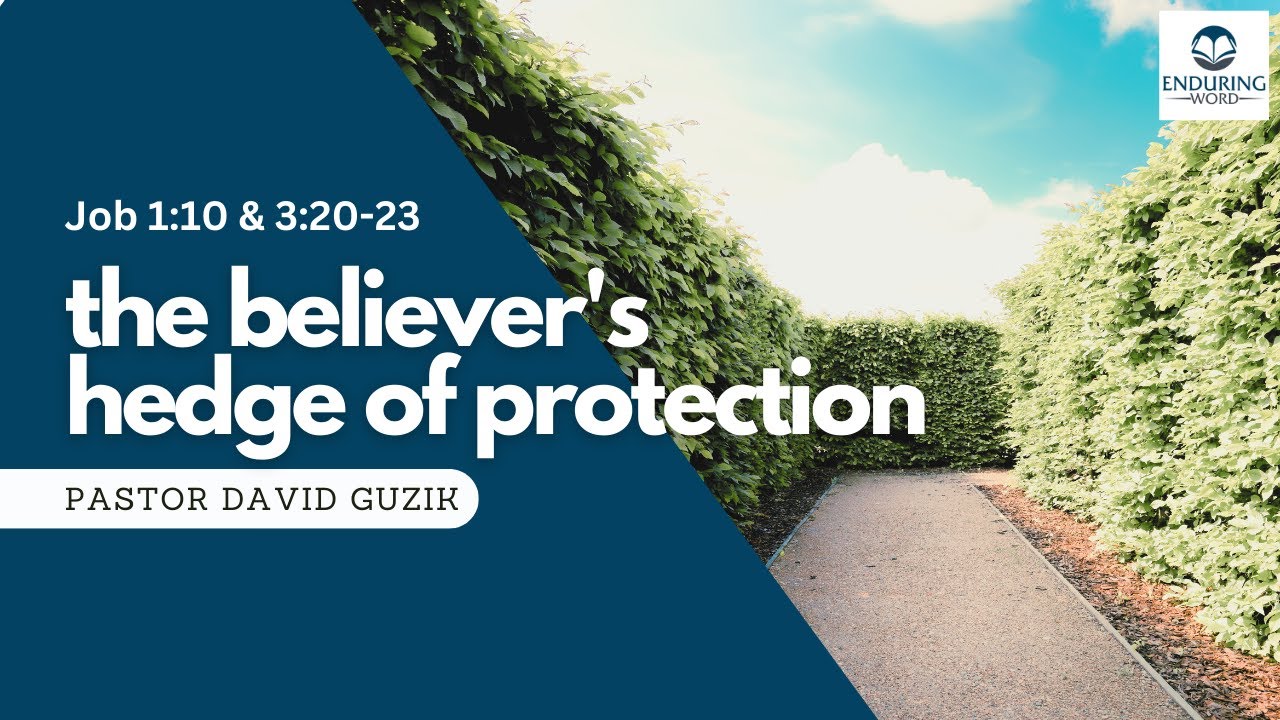
The Believer's Hedge of Protection — Job 1:10 & 3:20-23
Best Prayers
Best Prayers

LISTEN TO THIS | Powerful & Blessed Prayers To Uproot Everything That Is Evil In Your Life