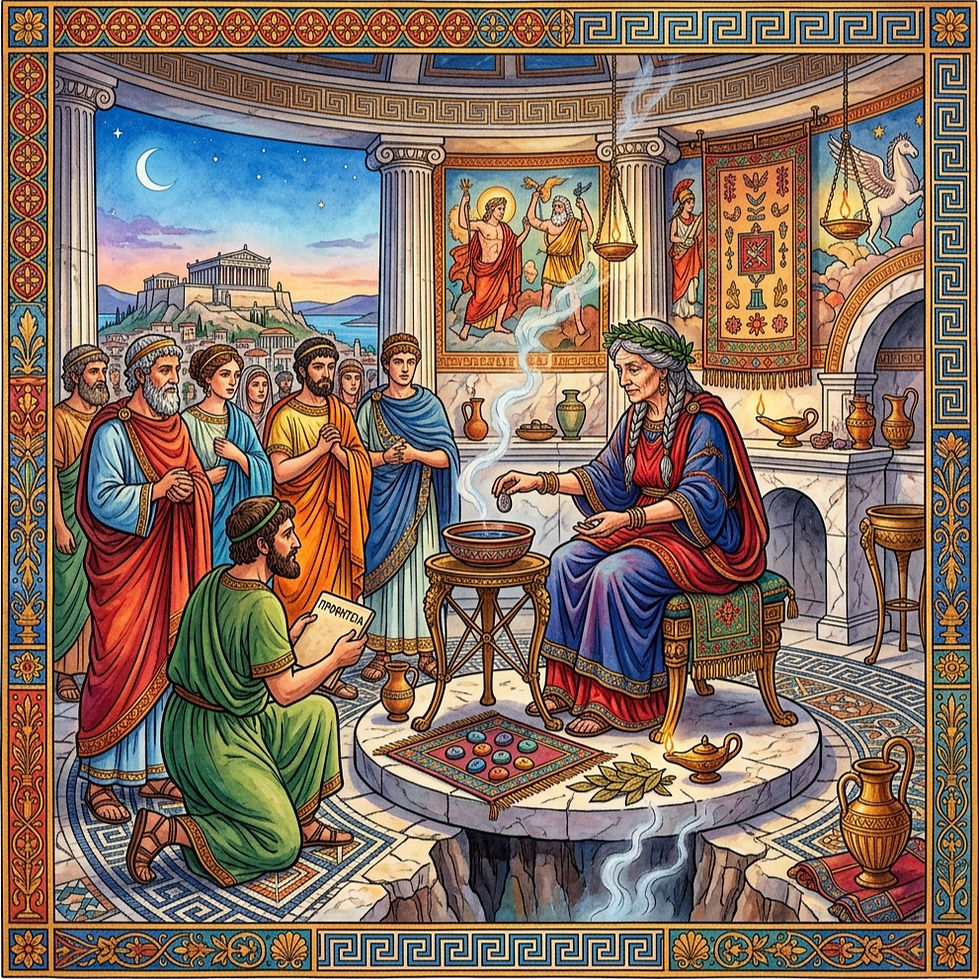
Divination
Using the New International Version, here are the core scriptures that speak about how bad divination is, often listing it as a detestable practice and a sin of rebellion against God.
The Main Prohibition
Deuteronomy 18:10-12
"Let no one be found among you who sacrifices their son or daughter in the fire, who practices divination or sorcery, interprets omens, engages in witchcraft, or casts spells, or who is a medium or spiritist or who consults the dead. Anyone who does these things is detestable to the LORD; because of these same detestable practices the LORD your God will drive out those nations before you."
Key takeaway: Divination is explicitly called a "detestable" practice, putting it on the same level as child sacrifice and witchcraft, and is stated as a reason for God's judgment against other nations.
This passage is the clearest and most comprehensive prohibition, listing divination among many condemned occult practices. The reason divination is so strongly condemned and labeled an "abomination" or linked with the sin of rebellion (1 Samuel 15:23) is rooted in four major theological and practical concerns:
1. It is a Rejection of God's Authority (Idolatry/Rebellion)
In the biblical view, God is the ultimate, sovereign source of all knowledge, especially knowledge of the future (omniscience).
-
Seeking Knowledge Apart from God: When a person turns to divination—whether through tarot, astrology, palmistry, or consulting a medium—they are attempting to gain secret information through a method that God did not authorize and, in fact, explicitly forbade.
-
A Usurpation of God's Role: This act is seen as trying to bypass God or force divine knowledge out of non-divine sources. It places trust in a ritual, an object, or a spirit other than the Creator, which is the definition of idolatry (Exodus 20:3).
-
The Sin of Rebellion: As 1 (Samuel 15:23) states, "For rebellion is like the sin of divination..." This comparison highlights that refusing to submit to God's authority in how one seeks guidance is an act of open defiance.
Key takeaway: Samuel uses divination as a benchmark for serious sin, stating that rejecting God's direct command (rebellion) is morally equivalent to practicing divination.
2. It Opens the Door to Demonic Influence
The Bible attributes the power behind true, yet condemned, fortune-telling not to harmless energy or random chance, but to malevolent spiritual forces.
-
Source of the Power: The New Testament clearly links divination with demons. This shows that the power behind fortune-telling is demonic:
-
Acts 16:16, "Once when we were going to the place of prayer, we were met by a female slave who had a spirit by which she predicted the future 'spirit of divination'. She earned a great deal of money for her owners by fortune-telling."
Key takeaway: Paul casts out this "spirit" in the name of Jesus, indicating that fortune-telling/divination, even when successful, is linked to a harmful, non-divine supernatural power.
-
These scriptures consistently warn that seeking hidden knowledge through divination is a rejection of God's authority and a serious offense against Him.
-
Danger of Deception: By using occult practices, a person is seen as unwittingly or intentionally engaging with spiritual entities who are enemies of God. Any true information they might receive is a lure designed to deceive and pull them away from God's protection and truth.
3. It Undermines Faith & Trust in God
Divination is seen as an expression of anxiety and a profound lack of faith in God's ability to govern the future.
-
Focus on the Unknown: Instead of resting in God's wisdom and choosing to walk by faith, the person is desperately trying to seize control of the future by knowing it prematurely.
-
The Call to Trust: The approved path is to trust God's overall plan (Romans 8:28), pray for wisdom (James 1:5), and walk obediently in the revealed word, not to seek guarantees about tomorrow.
4. It Defiles & Associates with Paganism
In the Old Testament context, the strict prohibition of divination was critical for maintaining the holiness and identity of Israel.
-
Separation and Holiness: God's people were called to be holy (set apart) and not to follow the practices of the surrounding nations (Leviticus 19:26) “Do not eat any meat with the blood still in it. “Do not practice divination or seek omens."
Key takeaway: This places the rejection of divination alongside other fundamental laws intended to keep the people holy and distinct from surrounding cultures.
Divination was a central feature of the Canaanite religion, often intertwined with horrific acts like child sacrifice (Deuteronomy 18:10) Spiritual Defilement: The practices were considered spiritually "unclean" and "detestable," meaning they stained the practitioner and the community, drawing them into the same judgment reserved for the nations they were replacing.
-In summary, divination is not just a mild error, game or minor deviation ; it is viewed as a comprehensive sin that fundamentally betrays the relationship with God by rejecting His exclusive authority, aligning with evil forces, and replacing trust with forbidden anxiety.
“No one can serve two masters. Either you will hate the one and love the other, or you will be devoted to the one and despise the other. You cannot serve both God and money" (Mathew 6:24).

Dealing with Divination and Enchantment | What is Divination? Meaning and Bible Examples

The spirit of Divination vs Prophecy | Miz Mzwakhe Tancredi

Divination, Witchcraft, and Sorcery - Derek Prince
