The Elements

The Elements
Seven Elements of Faith

The Water
Grace of God

The Light
Spiritual Awakening

The Earth
Provision for Life

The Oil
Purpose & the Spirit

The Breath
Creation & Renewal
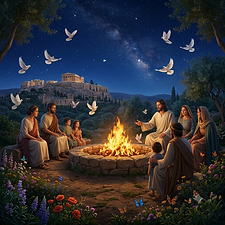
The Fire
Sanctifies the Heart
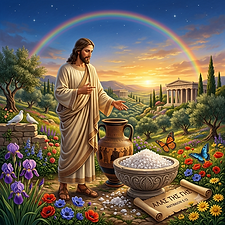
The Salt
Seasoning the World

Part 1: The Oil (Strength and Restoration)
Core Truth: God gives you strength, His healing grace, to bless your heart and run your race.
-
[ ] 1. Question: What specific purpose does the element of oil represent when a believer feels weary or burdened?
Answer: It represents God's sacred anointing, restorative healing, and the supernatural endurance needed for life's journey.
-
[ ] 2. Question: How does oil act as a supernatural resource for life's journey?
Answer: By pouring out as an unbroken stream that soothes deep wounds and invigorates the spirit with holy purpose.
-
[ ] 3. Question: In what ways does God's grace pour out like an unbroken stream?
Answer: Continuously supplying relief and restorative healing through every trial and heavy pace.
-
[ ] 4. Question: What role does anointing play in lifting a believer's mind?
Answer: It provides anointed power that elevates perspective and spiritual focus.
-
[ ] 5. Question: How does oil help in leaving weakness behind during trials?
Answer: By imparting spiritual vigor and endurance that helps believers transcend human frailty.
-
[ ] 6. Question: What is the direct connection between oil and spiritual endurance?
Answer: Oil symbolizes the divine refueling necessary to sustain stamina through extended spiritual and physical trials.
-
[ ] 7. Question: How does the rhyming reflection describe finding relief within grace?
Answer: Through every trial and heavy pace, finding relief and anointed power within His grace.
-
[ ] 8. Question: Why is oil considered a symbol of sacred restoration rather than just temporary comfort?
Answer: Because it deeply addresses soul wounds and restores holy purpose rather than merely masking discomfort.
-
[ ] 9. Question: How does this element prepare a believer to run their spiritual race?
Answer: By blessing the heart and equipping them with divine strength to press forward without fainting.
-
[ ] 10. Question: What final emotional or spiritual state does an anointed heart achieve?
Answer: A state of renewed vitality, peace, and unwavering purpose aligned with God's will.
Part 2: The Salt of Integrity (Purity and Preservation)
Core Truth: Staying true and keeping clean, to bless the world in ways unseen.
-
[ ] 1. Question: What four primary uses did salt have in the ancient world?
Answer: Preservation, seasoning, purification, and covenantal sealing.
-
[ ] 2. Question: What title does Jesus give His followers in Matthew 5:13, and what does it imply?
Answer: "Salt of the earth," implying a call to be a distinct, transformative presence within society rather than withdrawing from it.
-
[ ] 3. Question: How does salt functionally influence its environment (quiet vs. dominant)?
Answer: Through quiet, pervasive influence—preserving what is good, adding spiritual flavor, and halting moral decay rather than dominating.
-
[ ] 4. Question: Why is maintaining chemical distinctiveness crucial for a believer's influence?
Answer: Salt must retain its unique property to be effective; similarly, believers must maintain distinct character rather than blending into worldly culture.
-
[ ] 5. Question: How does the historical practice of rubbing salt into meat apply to Christians in society?
Answer: Christians serve as a moral preservative, resisting corruption and preventing spiritual spoilage through integrity and righteousness.
-
[ ] 6. Question: What does the "covenant of salt" symbolize in Scripture (Leviticus 2:13)?
Answer: An enduring, indestructible, and sacred bond between God and His people, representing unyielding devotion.
-
[ ] 7. Question: According to Colossians 4:6, how should a believer's conversation be maintained?
Answer: Always full of grace, seasoned with salt, so that they know how to answer everyone with wisdom.
-
[ ] 8. Question: Why does consistent, godly behavior carry more weight than arguments or lectures?
Answer: Because quiet action and genuine character speak a universal language that wins over hearts more effectively than debates.
-
[ ] 9. Question: How did ancient salt lose its efficacy, and what does this symbolize for a believer?
Answer: It was mixed with impurities near the Dead Sea; it symbolizes spiritual compromise and conformity that neutralizes influence.
-
[ ] 10. Question: What is the ultimate assignment of a believer regarding worldly culture?
Answer: To penetrate it with distinct Christlike character, preserving what is holy and acting as a catalyst for divine restoration.
Part 3: The Light of Truth (Illumination and Character)
Core Truth: Divine truth shining pure and bright, to show Christ's love and guide our sight.
-
[ ] 1. Question: From Genesis to Revelation, what does light fundamentally symbolize regarding God's nature?
Answer: God's presence, truth, and holy nature.
-
[ ] 2. Question: What title does Jesus give His followers in Matthew 5:14 regarding the world's condition?
Answer: "Light of the world," placed in a world darkened by despair, ignorance, and spiritual decay.
-
[ ] 3. Question: Why can light never be considered passive according to its characteristics?
Answer: Because it actively penetrates darkness, exposes what is hidden, provides directional guidance, and restores vision.
-
[ ] 4. Question: In biblical symbolism, what do darkness and light represent respectively?
Answer: Darkness represents spiritual blindness, sin, and separation from God; light represents divine truth, wisdom, and holy living.
-
[ ] 5. Question: How does the illustration of the moon describe a believer's righteousness?
Answer: Just as the moon has no light of its own and reflects the sun, believers do not generate their own righteousness but reflect Jesus Christ.
-
[ ] 6. Question: In the context of Psalm 119:105, how does Scripture function as light?
Answer: It acts as a lamp for our feet and a light on our path, illuminating immediate steps and revealing overarching direction.
-
[ ] 7. Question: What point does Jesus make by stating a lamp should be put on a stand instead of under a bowl?
Answer: True faith is meant to be a public, visible testimony of good deeds rather than a hidden, private secret.
-
[ ] 8. Question: What is the primary purpose of letting your light shine before others?
Answer: To lead others to recognize and glorify the Heavenly Father, rather than drawing attention to oneself.
-
[ ] 9. Question: What negative impact does hiding one's faith have on a dark world?
Answer: It renders the light ineffective and deprives a dark world of the guidance and warmth it desperately needs.
-
[ ] 10. Question: What spiritual danger arises when someone claims fellowship with God while walking in darkness?
Answer: It leads to spiritual hypocrisy because true light requires complete alignment between profession and daily living.
Part 4: The Mystery of the Water (Renewal & Continuous Connection)
Core Truth: Cleansed from the past so life can start, with fresh living water for your heart.
-
[ ] 1. Question: In the opening illustration, what happens to a runner who has fuel but goes without water?
Answer: Their body seizes up, their mind becomes clouded, and physical residue cakes onto their skin, mirroring spiritual exhaustion.
-
[ ] 2. Question: What specific role does Water play alongside the Oil in a believer's walk?
Answer: While Oil provides fuel and glow, Water provides the flow, ensuring movement with clarity and purity.
-
[ ] 3. Question: How did the waters of the Red Sea function in Exodus 14 for the Israelites and oppressors?
Answer: It served as a wall of protection for the resilient and a grave for the oppressor, separating them from slavery.
-
[ ] 4. Question: What does God's "washing of the water" accomplish for the soul (Ezekiel 36:25)?
Answer: It scrubs away the spiritual residue of sin, grief, and impurities, making the believer clean and holy.
-
[ ] 5. Question: What physical and spiritual reality does baptism represent as a technology of reset?
Answer: The old self is buried in the water, and the new person rises up refreshed and renewed.
-
[ ] 6. Question: What is the core difference between a "cistern" and a "spring" regarding Living Water?
Answer: A cistern merely holds water, whereas a spring creates water, representing an internal source of the Holy Spirit.
-
[ ] 7. Question: How does God demonstrate provision during dry wilderness places (Exodus 17:6)?
Answer: He pulls hydration out of impossible circumstances, bringing water from a rock or turning parched ground into springs.
-
[ ] 8. Question: When a believer is bruised like an olive for oil, what does Water prevent?
Answer: It keeps the spirit from becoming brittle and breaking under pressure.
-
[ ] 9. Question: Where does the biblical river narrative begin and end?
Answer: It begins at a river in Eden and ends at the River of the Water of Life flowing from God's throne in the New Jerusalem.
-
[ ] 10. Question: In the final summary, what specific function does Water serve relative to the Word and Oil?
Answer: It is the solvent allowing the Spirit to move without friction, ensuring the believer finishes clean, clear, and satisfied.
Part 5: The Element of Earth (Humility and Firm Foundation)
Core Truth: Staying humble on God's firm ground, so good fruit in your life is found.
-
[ ] 1. Question: What do physical ground, fertile soil, and solid rock metaphorically represent?
Answer: The human heart, spiritual stability, and the necessity of remaining firmly established in God.
-
[ ] 2. Question: What quieter, deep-rooted virtues does earth emphasize compared to other elements?
Answer: Humility, patience, steadfastness, and obedience.
-
[ ] 3. Question: How must our spiritual lives be maintained to produce a healthy harvest like physical soil?
Answer: Through continuous grounding in God's Word, keeping free from thorns, and being cultivated and nourished daily.
-
[ ] 4. Question: According to the text, how is true spiritual height achieved?
Answer: Only through depth—depth of character, depth of faith, and an enduring commitment to walk humbly before God.
-
[ ] 5. Question: What is the core truth associated with the element of earth?
Answer: Staying humble on God's firm ground ensures that good, lasting fruit is produced in your life.
-
[ ] 6. Question: Based on Colossians 2:6-7, how are believers instructed to live their lives in Christ?
Answer: Rooted and built up in Him, strengthened in the faith as taught, and overflowing with thankfulness.
-
[ ] 7. Question: In Matthew 7:24, what is a person who puts Jesus' words into practice compared to?
Answer: A wise man who built his house on the rock.
-
[ ] 8. Question: What three practices are required for cultivating spiritual ground?
Answer: Daily prayer, active obedience to God's Word, and a heart attitude of humility.
-
[ ] 9. Question: What danger does a faith face if it lacks deep roots when trials arise?
Answer: Even the most passionate faith can wither and fail when hardships or trials come.
-
[ ] 10. Question: What kind of faith does anchoring our lives in Jesus' teachings ultimately establish?
Answer: An enduring, storm-resistant faith that yields a rich harvest of spiritual fruit and Christlike character.
Part 6: The Breath (Mind Renewal and Unseen Spirit)
Core Truth: God breathing life into your soul, to clear your mind and make you whole.
-
[ ] 1. Question: What does the healing of the blind man in John 9 parallel from Genesis 2:7?
Answer: Just as man was formed from dust, Jesus used dust and saliva to reform and complete an incomplete vessel.
-
[ ] 2. Question: What does the use of saliva symbolize in Jesus' healing of the blind man?
Answer: It acts as a fluid beginning life-sustenance, injecting Jesus' living frequency into dead cells.
-
[ ] 3. Question: Why did Jesus send the blind man to the Pool of Siloam after applying clay?
Answer: To show that while the Holy Touch provides healing, human obedience seals it.
-
[ ] 4. Question: What physical actions did Jesus take when healing the deaf man in Mark 7?
Answer: He put His fingers in the man's ears and touched his tongue with saliva.
-
[ ] 5. Question: What did Jesus' heavy sigh (stenazō) represent during the healing?
Answer: A deep, empathetic spiritual transfer of power from the Creator to the creature.
-
[ ] 6. Question: Why did Jesus perform a two-stage restoration in Mark 8 ("men like trees walking")?
Answer: To teach that spiritual sanctification and alignment of vision can be a progressive, step-by-step process.
-
[ ] 7. Question: Based on Job 33:4, what is the consistent role of the breath throughout Scripture?
Answer: It gives life, animates the soul, and imparts the Holy Spirit.
-
[ ] 8. Question: What does Jesus making clay with spit reveal about how God deals with human brokenness?
Answer: He is willing to get His hands dirty in our earthly flaws rather than healing from a distance.
-
[ ] 9. Question: What gap between physical and spiritual worlds does the use of spit and mud bridge?
Answer: The gap between The Vessel (our physical body) and The Elements (the physical world).
-
[ ] 10. Question: What do the lowly things of the earth manifest when used by Christ?
Answer: The highest glories of the Kingdom through the breath and virtue (dunamis) of God.
Part 7: The Refining Fire (Holy Purification and Passion)
Core Truth: Cleansed by His power to change from within, with a spark in your heart to live fully for Him.
-
[ ] 1. Question: Throughout Scripture, what four things is fire consistently associated with regarding God?
Answer: His holy presence, unyielding purity, supernatural transformation, and divine zeal.
-
[ ] 2. Question: What three biblical examples show God's active, holy engagement appearing as fire?
Answer: The burning bush, the pillar of fire in the wilderness, and the tongues of fire at Pentecost.
-
[ ] 3. Question: Just as physical fire purifies precious metals, what does God's holy fire cleanse in a believer?
Answer: Our intentions, motives, and character, burning away spiritual compromise.
-
[ ] 4. Question: What kind of shift does spiritual fire bring to a believer's passive faith?
Answer: It transforms cold, passive faith into a vibrant, ignited zeal for devotion, worship, and courageous service.
-
[ ] 5. Question: What is the core truth associated with the element of fire?
Answer: Cleansed by His power to change from within, a holy spark in your heart empowers you to live fully for Him.
-
[ ] 6. Question: What do Acts 2:3-4 and Hebrews 12:29 respectively reveal about fire?
Answer: Acts 2 describes tongues of fire filling believers with the Holy Spirit; Hebrews 12:29 states that "our God is a consuming fire."
-
[ ] 7. Question: What three actions are required to yield to the fire of God?
Answer: Surrendering ungodly habits, opening the heart to the Holy Spirit's refining, and fanning spiritual gifts into flame.
-
[ ] 8. Question: What spiritual condition does the element of fire challenge believers never to settle for?
Answer: A lukewarm or stagnant faith (spiritual apathy).
-
[ ] 9. Question: What is melted away when we allow God's consuming fire to refine our character?
Answer: Spiritual apathy and dross are melted away, leaving resilient, pure, and courageous devotion.
-
[ ] 10. Question: What ultimate walk of faith does the element of fire produce?
Answer: A refined, courageous, and passionate walk that honors God and empowers believers to stand boldly as shining lights.