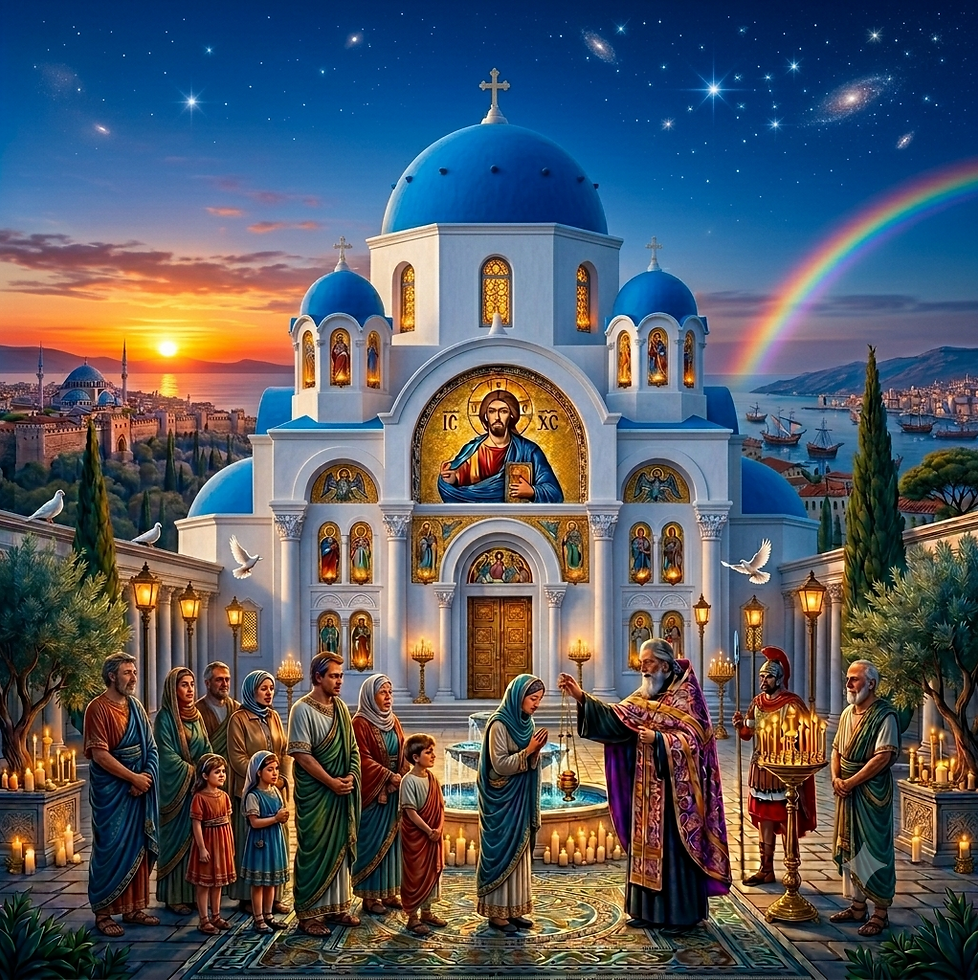
Orthodoxy
Orthodoxy Structure & Global Presence
The Contemporary Reality
I. Introduction:
Eastern Orthodoxy is the second-largest Christian communion in the world, encompassing over 220 million believers globally. Rather than being a centralized global organization run from a single headquarters, Orthodoxy exists as a vibrant family of self-governing regional churches united by a shared faith, identical worship practices, and ancient sacramental life. From the historic spires of Eastern Europe and the Mediterranean to growing communities across North America, Africa, and Asia, modern Orthodoxy bridges ancient heritage with contemporary life.
II. Organizational Structure: The Autocephalous Family
To navigate how Orthodoxy operates today, it helps to look at its administrative design:
Autocephalous Churches: Orthodoxy is composed of independent ("autocephalous") national and regional churches. Major jurisdictions include the Church of Constantinople, Antioch, Alexandria, Jerusalem, Russia, Greece, Serbia, Romania, and the Orthodox Church in America.
The Ecumenical Patriarch: The Patriarch of Constantinople serves as the spiritual figurehead and coordinator of unity ("first among equals"), but holds no administrative command over other regional bishops or patriarchs.
Synodal Governance: Every regional church is governed by its own Council of Bishops (Synod). Important decisions are made collectively rather than issued by a single ruler.
III. The Sensory Experience of Orthodox Culture
Walking into an Orthodox space engages every human sense, designed to transport the worshiper out of mundane time and into a heavenly realm:
Visual Aspect: Gold leaf artwork, vivid wall frescoes, soft candlelight, and traditional holy icons designed to draw the eye away from mundane daily life and toward heavenly reality.
Auditory Aspect: Exclusively unamplified human voices through a cappella choirs and rhythmic chanting. No musical instruments are used, honoring the human voice as the ultimate instrument created by God.
Olfactory Aspect: Sweet-smelling incense burning throughout the entire service, representing the prayers of the congregation physically rising up to heaven.
Physical Action: Active participation through making the Sign of the Cross, lighting prayer candles, bowing, and venerating sacred icons with a touch or a kiss upon entering the sanctuary.
Sacred Space: Churches are traditionally oriented toward the East (toward the rising sun, symbolizing the Resurrection). Domed ceilings draw the eye upward toward the Pantokrator (Christ as Ruler of All).
IV. Life Milestones & Sacramental Living
For an Orthodox believer, faith is an active lifestyle marked by seven Holy Mysteries (Sacraments) that weave God into human existence:
Baptism & Chrismation: Infants and converts are fully immersed three times and immediately anointed with holy oil (Chrismation) to receive the gifts of the Holy Spirit.
Immediate Communion: Unlike Western traditions where First Communion happens later in childhood, Orthodox infants receive the Holy Eucharist immediately after baptism, making them full participating members of the Church from day one.
The Domestic Church: The home is considered a micro-sanctuary. Orthodox households typically feature an "Icon Corner" (a dedicated space facing east for daily family prayer, lit by a small vigil lamp).
V. Global Footprint & Ethnic Diversity
While often associated with specific cultural heritages, modern Orthodoxy transcends national boundaries:
The Cradle Lands: Eastern Europe, the Balkans, and the Middle East remain the historical demographic heartlands of Orthodox culture.
Western Growth: In nations like the United States, Australia, and Western Europe, Orthodoxy is increasingly characterized by multi-ethnic parishes, English-language services, and a steady stream of adult converts seeking liturgical depth and structured spiritual discipline.
Summary of Page
Core Theme: The structural design, sensory worship environment, and daily lived culture of modern Eastern Orthodoxy.
Key Focus: How self-governing churches operate, what an Orthodox service feels like, and how sacraments shape family life.
Reader Takeaway: A clear picture of Orthodoxy as a living, worldwide community of believers defined by sensory beauty, decentralization, and daily spiritual discipline.

Origins of Orthodoxy
The Ancient Roots of Orthodoxy
The Path of Continuity, Tradition & Mystical Union
The Unbroken Line
The story of Eastern Orthodoxy is fundamentally a narrative of unchanging continuity, tracing its origins directly back to Jesus Christ and the twelve Apostles in first-century Judea.
While Western Christianity experienced radical shifts through the rise of the Roman Papacy and the later fractures of the Protestant Reformation, Orthodoxy views itself as the preserved, original Church.
The word "Orthodoxy" itself stems from the Greek words orthos ("correct") and doxa ("glory" or "worship"), signaling its core mission: to maintain the exact faith, theology, and liturgical practices handed down by the early Church Fathers.
It is a tradition deeply rooted in the history of the Eastern Mediterranean, the Byzantine Empire, and the ancient theological capitals of Jerusalem, Antioch, Alexandria, and Constantinople.
The Core Logic
Why Orthodoxy Claims Continuity
To understand the Orthodox worldview, one must look at the specific theological and historical arguments it uses to establish its role as the ancient standard of Christian faith:
The Authority of Holy Tradition: Unlike Protestantism, which relies on scripture alone (Sola Scriptura), Orthodoxy believes that the Holy Spirit guides the Church through a combined "Holy Tradition." This includes the Bible, the decisions of the Seven Ecumenical Councils, the writings of the early Church Fathers, and the ancient liturgy itself, all treated as an indivisible whole.
Theosis (Deification): While Western theology often frames salvation in legal terms (a debt paid for sin), the core logic of Orthodoxy is Theosis—the process of becoming like God. Based on the teachings of the early Church, Orthodoxy argues that "God became man so that man might become god" (not in essence, but by sharing in God's divine energies and character).
Consensus of the Church: Orthodoxy rejects the concept of a single, infallible human leader (like the Pope). Instead, it operates on a conciliar model, meaning major theological truths must be decided by a consensus of bishops from autocephalous (self-governing) national churches, preserving the structure of the early centuries.
Mystical and Liturgical Preservations: The Orthodox Church considers its worship to be a literal reflection of heavenly worship. The use of incense, chanting, specific architectural layouts, and the absence of musical instruments are viewed not as optional preferences, but as essential cosmic patterns preserved from antiquity.
The Theological Divergence
Orthodoxy vs. Catholicism & Protestantism
Orthodoxy stands apart from both major branches of Western Christianity on several profound theological fronts:
The Papacy: Orthodoxy recognizes the Bishop of Rome (the Pope) only as a "first among equals" historically, rejecting the claim that the Pope holds supreme authority or infallibility over the entire global Church.
The Filioque Controversy: A major catalyst for the Great Schism of 1054 CE was the Western church adding the word Filioque ("and the Son") to the Nicene Creed. Orthodoxy argues this alters the eternal relationship within the Trinity, maintaining strictly that the Holy Spirit proceeds only from the Father.
Ancestral Sin vs. Original Sin: Orthodoxy does not believe humanity inherited the guilt of Adam's sin, only the consequences (death, sickness, and a broken world). Therefore, salvation is viewed less as a courtroom pardon and more as a healing process inside a spiritual hospital.
Icons as Windows to Heaven: Unlike many Protestant denominations that view religious images with caution, Orthodoxy mandates the veneration of sacred icons. The logic is that because Jesus became a physical man, depicting Him and the saints validates the reality of the incarnation.
The Architecture of Spiritual Life
Key Practices
The Divine Liturgy: The primary worship service, centered on the Eucharist, which has remained largely unchanged since the formulations of St. John Chrysostom in the 4th century.
The Iconostasis: A prominent wall of icons separating the main congregation (the nave) from the altar (the sanctuary), symbolizing the bridge between heaven and earth.
Ascetic Discipline and Fasting: Orthodox Christians observe a rigorous calendar of fasting, abstaining from meat, dairy, oil, and wine for roughly half the days of the year (including Great Lent) to subdue physical desires and sharpen spiritual focus.
The Jesus Prayer: A foundational mystical practice, especially among monks, involving the rhythmic repetition of the words: "Lord Jesus Christ, Son of God, have mercy on me, a sinner," designed to achieve unceasing prayer of the heart.
Index of Key Concepts
Ecumenical Councils: The seven historic gatherings of bishops between 325 CE and 787 CE that defined core Christian doctrines, such as the Trinity and the dual nature of Christ.
Divine Energies: The Orthodox distinction between God’s inaccessible Essence (who God is in Himself) and His accessible Energies (how God interacts with and transforms creation).
Septuagint: The ancient Greek translation of the Old Testament, which the Orthodox Church treats as the authoritative scriptural text over the Hebrew Masoretic text used in Western Bibles.
Patristics: The study of the writings and theological defenses composed by the early Church Fathers (e.g., Athanasius, Basil the Great, Gregory the Nazianzen).
In conclusion, Eastern Orthodoxy presents a worldview where theology is inseparable from worship and mystical experience. It rejects the idea that Christian doctrine needs to adapt to modern cultural trends, choosing instead to function as an anchor to the ancient past. For visitors to Prophetic Passage, exploring Orthodoxy reveals a deeply liturgical and experiential path to the Divine—one that measures success not by institutional growth or theological innovation, but by its fidelity to the ancient, mystical inheritance of the early Christian world.
Summary
Master Class on Eastern Orthodoxy
Core Theme: The preservation of apostolic continuity, ancient tradition, and the mystical pursuit of Theosis.
Key Discussions: The authority of Holy Tradition, the rejection of papal supremacy, and the role of icons and fasting in spiritual warfare.
Reader Takeaway: An understanding of Orthodoxy as the Eastern, mystical lineage of Christianity that prioritizes changelessness and spiritual healing over legalistic theology.

Key Differences of Orthodoxy
Comparitive Analysis
World Religions vs. Orthodoxy
Orthodoxy: Places authority in the Holy Tradition of the Church, which includes the Bible, the ancient creeds, and the historic decisions of the early Ecumenical Councils, relying on a council of equal bishops rather than a single leader.
Christianity: Holds that the Bible is the sole, final authority for faith and daily living, relying on scripture alone rather than human church traditions or centralized hierarchies.
Catholicism: Relies on a dual authority structure: Sacred Scripture and Holy Tradition, both of which are authoritatively interpreted by the Pope and bishops.
Islam: Rejects Christian scriptures as being altered over time. The Quran is the final, perfect, and literal word of God, supplemented by the Hadith (sayings of the Prophet Muhammad).
How a Person is Saved (Salvation)
Orthodoxy: Centers salvation on Theosis (deification)—an ongoing, mystical process where humans are healed from sin and progressively transformed to share in the divine nature.
Christianity: Emphasizes that salvation is entirely a free gift of God's grace received solely through personal faith in Jesus Christ, not by any human efforts, rituals, or sacraments.
Catholicism: Views salvation as a lifelong process where a believer must cooperate with God's grace through faith, good works, and participation in the Seven Sacraments.
Islam: Rejects the concept of a savior dying for humanity's sins. Individuals are born pure and achieve salvation by submitting to Allah, practicing the Five Pillars, and doing good deeds to outweigh their bad deeds on Judgment Day.
Church Hierarchy & Leadership
Orthodoxy: Managed by a council of equal bishops and patriarchs, with no single bishop holding supreme authority over the others. The Patriarch of Constantinople is honored as "first among equals," but has no universal power.
Christianity: Generally practices the "priesthood of all believers," meaning no special human mediator is needed between an individual and God. Churches are led locally by pastors or elders.
Catholicism: Governed by a highly structured global hierarchy led by the Pope, who holds supreme, universal authority over all churches worldwide.
Islam: Features no ordained priesthood or centralized human hierarchy; local spiritual guidance comes from scholars (Ulama) and prayer leaders (Imams) who understand Islamic law.
Sacraments & Holy Symbols
Orthodoxy: Practices seven sacraments through ancient, mystical liturgies, utilizing holy two-dimensional icons as windows to the spiritual world while completely avoiding three-dimensional statues.
Christianity: Generally recognizes only two ordinances (Baptism and Communion), often viewing communion strictly as a symbolic memorial of Christ's death.
Catholicism: Centers congregational life on the Seven Sacraments and extensively uses both three-dimensional statues and two-dimensional artwork to depict holy figures.
Islam: Rejects all sacraments, physical symbols, or images of the divine. Worship focuses purely on the Five Pillars (prayer, fasting, charity, declaration of faith, and pilgrimage).